.avif)


October 17, 2026
Best Treatment for Hooded Eyelids: Non-Surgical and Surgical Options
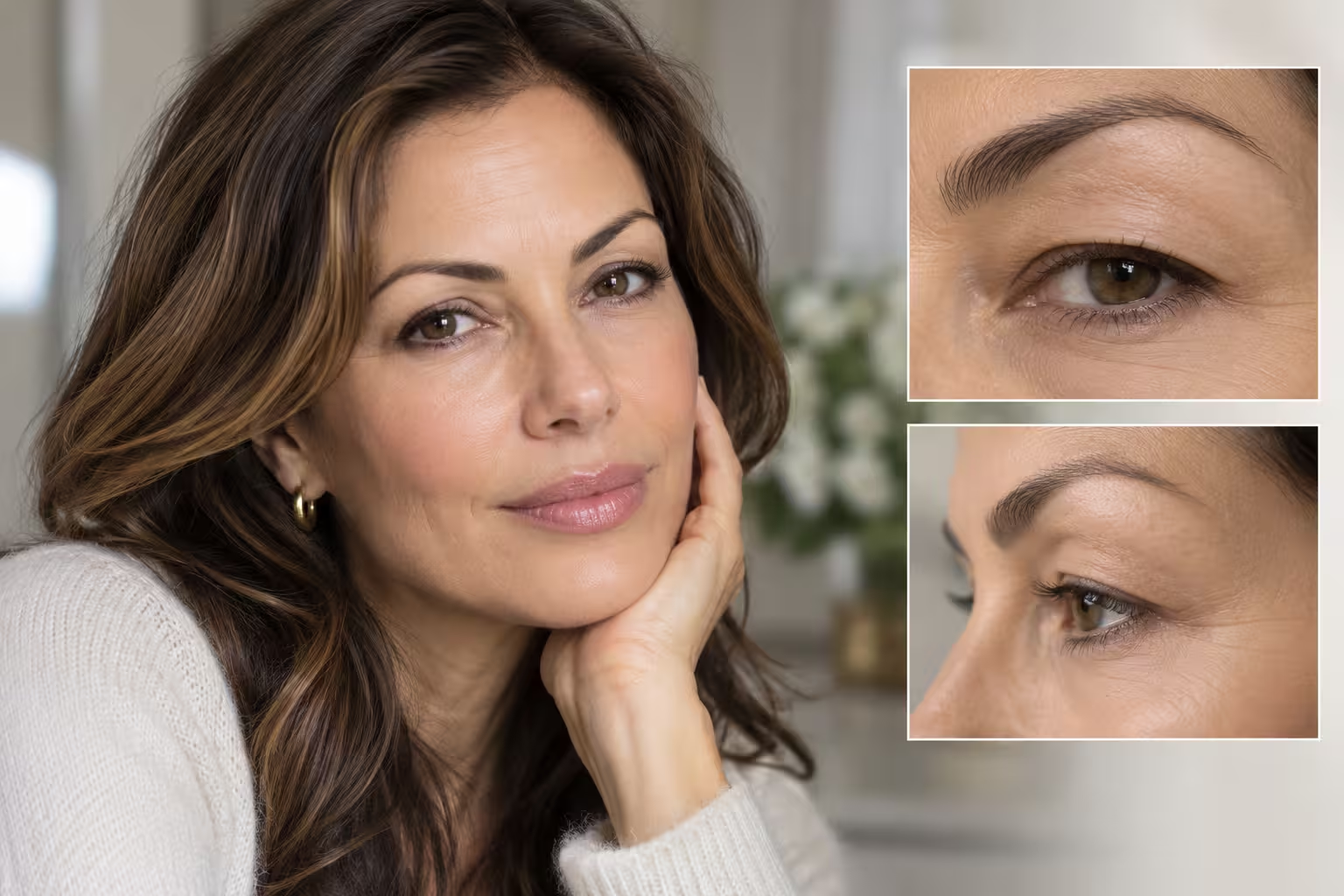
Hooded eyelids rarely appear overnight. Most people notice the change gradually: eyeshadow disappears into a fold, the upper lashes feel crowded, or the eyes look permanently tired in photographs, however well you have slept.
The best treatment depends on a question that is easy to overlook: what is actually causing the hooding? Excess eyelid skin, a brow that has dropped and a low-sitting eyelid can look similar in the mirror, but each is treated differently. It is where every consultation with Dr Maryam Zamani, an oculoplastic surgeon and facial aesthetics doctor, begins at her Chelsea clinic.
In short: for mild hooding, anti-wrinkle injections, careful brow support or skin-tightening treatments can soften the look for a time. For true excess skin, upper eyelid blepharoplasty is the most effective and longest-lasting option. If the brow has dropped, it may need to be lifted first or at the same time.
What are hooded eyelids?
Hooded eyelids are upper eyelids where a fold of skin hangs down from beneath the brow and covers some or all of the natural crease. Less of the eyelid is visible when your eyes are open, and in more advanced cases the skin rests on the lashes. For some people this is a lifelong feature of their eye shape. For others it develops with age.
Hooding is a description, not a diagnosis. It tells you what you see, not why, and the why decides the treatment.
What causes hooded eyelids?
- Genetics. Some people are born with heavier upper lids or a lower-set brow, and notice hooding in their thirties or even earlier.
- Ageing skin. Collagen and elastin decline over time, so eyelid skin loosens and gravity does the rest. Upper eyelid skin is thin, so changes show early.
- Brow descent. As the brow sags it can push skin down onto the lid, even when the eyelid skin itself is not excessive.
- Volume changes. Loss of support around the brow and temple, or fat that bulges in the upper lid, changes the contour of the whole eye area.
- Sun damage and lifestyle. UV exposure and smoking break down collagen and speed up thinning and crepey texture.
- A true droopy eyelid. Weakness of the muscle that lifts the lid, known as eyelid ptosis, is a separate condition that can look like hooding.
Is it hooded eyelids, a low brow or a droopy eyelid?
This is the question that separates a natural-looking result from a disappointing one.
Many patients have more than one of these. Operating on the upper lid alone when the brow is the main problem can leave the eye looking heavy. A careful assessment of brow position, lid position and skin excess, with you sitting upright and relaxed, is what makes the right plan possible.
A note on sudden changes. If an eyelid starts to droop suddenly, or the droop comes with double vision, headache, or weakness or numbness elsewhere, seek urgent medical advice. That needs a medical assessment, not a cosmetic one.
What are the non-surgical treatments for hooded eyelids?
Non-surgical treatment can help mild hooding, or suit patients who are not ready for surgery. It is important to be honest about the limits: nothing injected or applied to the skin removes excess eyelid skin.
Anti-wrinkle injections to lift the brow
Anti-wrinkle injections placed in the muscles that pull the brow down allow the brow to sit a little higher and open the eye slightly. The effect is modest and temporary, usually lasting a few months. It suits mild hooding where brow position is the main driver. Placement matters, because poorly placed treatment can make the lids feel heavier.
Filler support for the brow and temple
Carefully placed hyaluronic acid filler can restore support to the brow tail and temple and subtly improve the overall eye area. Injecting near the eye carries real risks and should only be done by a doctor with detailed anatomical knowledge. Hyaluronic acid can be dissolved if needed, and the clinic runs a dedicated filler complication clinic.
Skin-tightening treatments
Ultherapy, Morpheus8 radiofrequency microneedling, Plexr and CO2 laser resurfacing work on skin laxity and texture. They can tighten and refine mildly loose skin, with results building over several months. They are not a substitute for surgery when the excess is significant.
Combination treatment
The Tri-Brow Lift is a triple-action approach designed to address sagging, loss of definition and uneven skin tone around the brow and eye.
What will not work
Creams, eyelid tape and facial exercises cannot remove excess skin or lift a dropped brow. Good skincare improves skin quality, and it is a valuable support, but it does not change structure.
What are the surgical treatments for hooded eyelids?
Upper eyelid blepharoplasty
For true excess skin, upper eyelid blepharoplasty is the gold standard. A fine incision is placed within the natural crease of the eyelid. Excess skin is removed, and the muscle and fat beneath are refined where needed to restore a lighter, more defined contour. The scar sits in the fold of the lid and fades to be very discreet.
The operation usually takes 30 to 60 minutes and can be performed under local anaesthetic, with or without sedation, or under general anaesthetic. Stitches are removed after about a week, and most people return to office-based work within 7 to 10 days. Swelling continues to settle over the following weeks. Because it removes the skin that overhangs the lid, it can also improve peripheral vision where the upper field of sight is blocked.
Ageing continues after surgery, but many patients enjoy the result for a decade or more and never need a second operation.
Brow ptosis repair and internal brow pexy
If the brow itself has dropped, brow ptosis repair lifts the brow to open the eye. Internal brow pexy is a minimally invasive option for milder sagging. Either can be combined with eyelid surgery.
Eyelid ptosis repair
When the edge of the eyelid sits too low, eyelid ptosis repair corrects the position of the lid itself. A droopy eyelid and a hooded eyelid are different problems, and they are treated differently.
Adding skin resurfacing
Blepharoplasty removes excess skin but does not treat crepey texture. Dr Zamani often combines it with CO2 laser in a single procedure, known as blepharoplasty with laser eyelid resurfacing, so that both structure and skin quality improve. If crepey skin is part of your concern, her guide to the best treatment for crepey skin around the eyes explains the options.
Which treatment is best for you?
This table is a guide, not a diagnosis. Only an examination can confirm which row describes you.
What is recovery like after upper blepharoplasty?
Expect some bruising and swelling that improve over the first one to two weeks. Cold compresses in the first 48 hours and sleeping with your head raised help. Strenuous exercise should wait until your first review, and eye make-up can usually be resumed once the stitches are out. Avoid strong sun on the area for at least a month. The clinic's post-procedure guide covers aftercare in detail.
How do you choose a surgeon for hooded eyelids in the UK?
- Choose a surgeon with oculoplastic training, and check their registration with the General Medical Council.
- Ask who will operate and who will look after you afterwards.
- Ask to see before and after photographs of patients with anatomy similar to yours.
- Expect your brow, eyelid position and eye surface to be assessed, not just the skin.
- Be cautious of anyone who recommends the same treatment for every eye. A good surgeon will tell you when surgery is not the right answer.
Book a consultation with Dr Maryam Zamani
If hooded eyelids are bothering you, the first step is a proper assessment of your eyelids, brow and skin. Book a consultation at Dr Maryam Zamani's Chelsea clinic and she will explain which option, if any, is right for you. You can read more about Dr Zamani and view current pricing on the site.
Testimonials
Trustindex rating score: 4.7 of 5, based on 222 reviews
JT

My recent experience with the lovely Dr Maryam Zamani and her fabulous team was outstanding. Dr Maryam gave very professional and proactive...
EC
Maryam is highly skilled when it comes to injecting Botox and filler in the right places, and in the right amount. With other practitioners and doctors I have...
JB
The only one I trust for my skin since 10 years. She is truly amazing and an example for women . Very very happy about my laser treatment and her team is...
MCL
After taking my time researching plastic surgeons I decided to go to Dr. Zamani. I watched her IG often, saw what type of treatments she...
SS
I have been a patient of Dr Zamani’s for years, and to put it lightly, I will never let anyone touch my face if it isn’t her! Not only is Dr Zamani a wonderful person, her....
NC
I visited Doctor Zamani with very droopy upper eyelids and I had been thinking about surgery for sometime. I was given Doctor Zamani’s name by a friend who is in...
Frequently asked questions
What is the best treatment for hooded eyelids?
It depends on the cause. Mild hooding may improve with non-surgical brow support or skin tightening. True excess eyelid skin is best treated with upper eyelid blepharoplasty. A dropped brow may need a brow lift, alone or combined with eyelid surgery.
Can hooded eyelids be fixed without surgery?
Mild hooding can often be improved without surgery using anti-wrinkle injections, filler support or skin-tightening treatments. These options are temporary and cannot remove excess skin, so significant hooding is best corrected surgically.
Can hooded eyelids be fixed without surgery?
If your brow sits low and you raise your eyebrows to look open, the brow is likely involved. If a fold of skin overhangs the crease while the brow is well placed, the eyelid skin is the main issue. Many people need both assessed together.
Does upper blepharoplasty permanently fix hooded eyelids?
It removes the excess skin that is present at the time, and results commonly last a decade or more. Ageing continues, so the eyelids will still change gently over the years, but most patients do not need a second operation.
At what age should I consider treatment for hooded eyelids?
There is no set age. Many people notice heaviness in their forties, while others have hereditary hooding much earlier. What matters is whether the change bothers you or affects your vision. Dr Zamani's guide to the ideal age for blepharoplasty explains more.
Can hooded eyelids affect my vision?
Yes. Heavy upper eyelid skin can block the upper and outer parts of your field of vision. Mention this at consultation, as it is part of the assessment. For the full procedure explained, see her complete guide to blepharoplasty.
Frequently asked questions
What is the best treatment for hooded eyelids?
It depends on the cause. Mild hooding may improve with non-surgical brow support or skin tightening. True excess eyelid skin is best treated with upper eyelid blepharoplasty. A dropped brow may need a brow lift, alone or combined with eyelid surgery.
Can hooded eyelids be fixed without surgery?
Mild hooding can often be improved without surgery using anti-wrinkle injections, filler support or skin-tightening treatments. These options are temporary and cannot remove excess skin, so significant hooding is best corrected surgically.
How do I know whether I need a brow lift or an eyelid lift?
If your brow sits low and you raise your eyebrows to look open, the brow is likely involved. If a fold of skin overhangs the crease while the brow is well placed, the eyelid skin is the main issue. Many people need both assessed together.
Does upper blepharoplasty permanently fix hooded eyelids?
It removes the excess skin that is present at the time, and results commonly last a decade or more. Ageing continues, so the eyelids will still change gently over the years, but most patients do not need a second operation.
At what age should I consider treatment for hooded eyelids?
There is no set age. Many people notice heaviness in their forties, while others have hereditary hooding much earlier. What matters is whether the change bothers you or affects your vision. Dr Zamani's guide to the ideal age for blepharoplasty explains more.
Can hooded eyelids affect my vision?
Yes. Heavy upper eyelid skin can block the upper and outer parts of your field of vision. Mention this at consultation, as it is part of the assessment. For the full procedure explained, see her complete guide to blepharoplasty.
Is upper eyelid surgery safe?
When performed by a specialist, upper blepharoplasty is a safe and routine procedure. Risks include bruising, infection, bleeding, asymmetry, scarring and temporary dry eye symptoms. Serious complications are very rare, and a full discussion of risks takes place at consultation.
Book Consultation
As a leading Oculoplastic Surgeon with special interest in Facial Aesthetics, Dr. Maryam Zamani has garnered a global reputation - both in the US and UK - for her meticulous attention to detail and sought-after techniques for eyes and facial aesthetics.
Thank you! Your submission has been received!
Oops! Something went wrong while submitting the form.
Find The Clinic by Dr Maryam Zamani in the heart of Chelsea
Book NowLocated on the Kings Road, our clinic is easy to reach from Chelsea, Kensington, Belgravia, Knightsbridge, South Kensington, Fulham and Battersea. We are positioned just moments from Sloane Square with excellent transport links across Central and South West London.
Public Transport
- Nearest tube: Sloane Square (District & Circle lines)
- Approx. 5-minute walk
- Multiple bus routes along King’s Road
Public Transport
- Metered on-street parking available on surrounding roads
- Nearby car parks: Duke of York Square & Cadogan Place
- Please allow additional time during peak hours
Accessibility: Please let us know if you require any assistance prior to your appointment, our team will be happy to help ensure your visit is comfortable.