.avif)


June 9, 2026
What is blepharoplasty? The complete guide to eyelid surgery
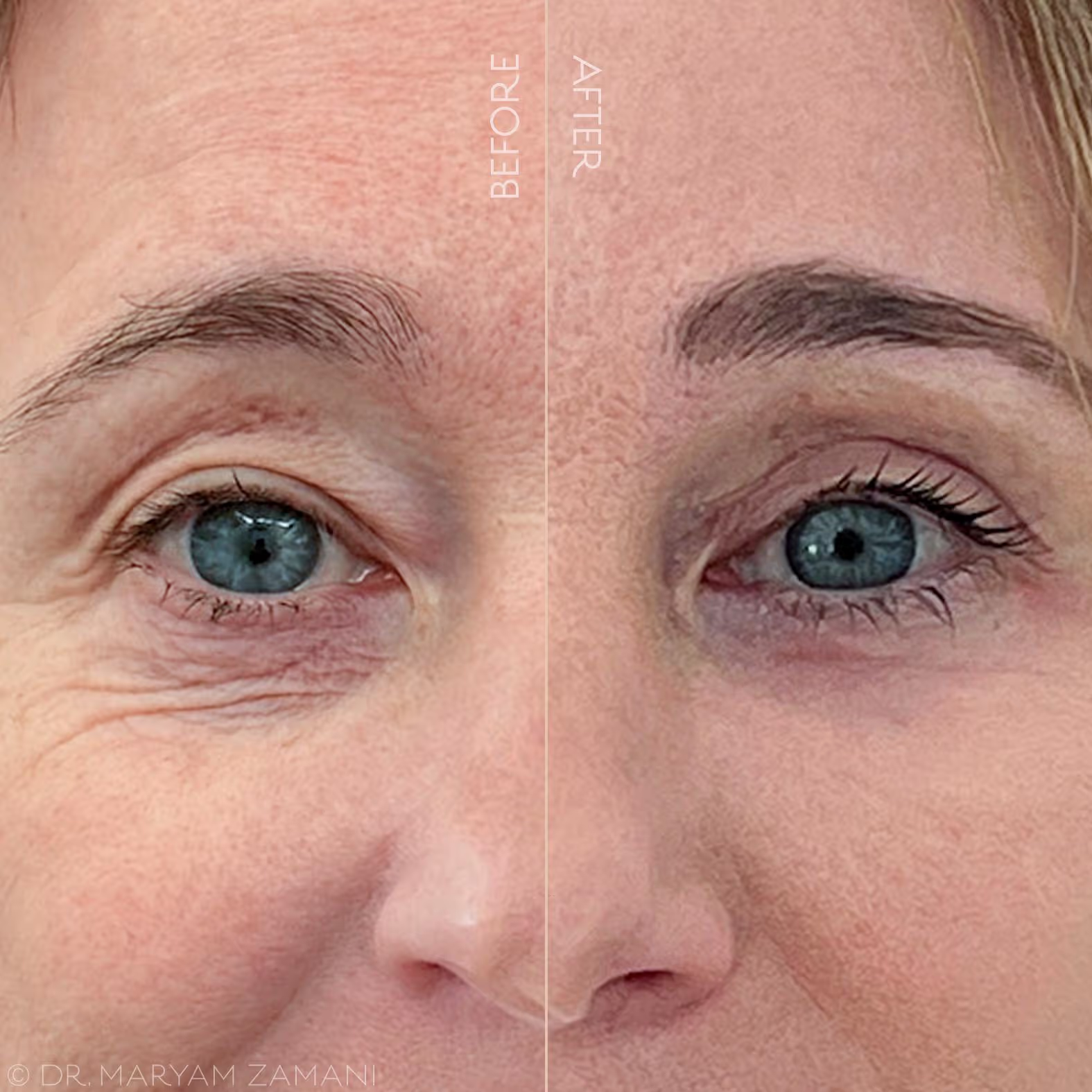
Blepharoplasty is a surgical procedure that removes or repositions excess skin, fat, and muscle from the upper eyelids, lower eyelids, or both. It is one of the most sought-after facial rejuvenation procedures in the UK, prized not for dramatic transformation but for the quiet, lasting quality of its results: eyes that look refreshed, open, and entirely natural.
This guide covers everything worth knowing before considering blepharoplasty: what the procedure involves, which concerns it addresses, who it is right for, and why choosing a surgeon who specialises exclusively in the eyelids makes a material difference to the outcome.
What does blepharoplasty treat?
The eyes age in two distinct ways, and blepharoplasty is designed to address both.
The upper eyelid accumulates excess skin over time. As skin loses its elasticity, it begins to fold over the natural crease of the lid, creating a hooded or heavy appearance that no amount of concealer or eye cream can lift. In more significant cases, this excess skin can obstruct peripheral vision or make it difficult to wear eye makeup as you once did.
The lower eyelid tells a different story. The small pockets of fat that cushion the eye socket are held in place by a thin membrane that weakens with age. As it does, that fat pushes forward, creating the persistent under-eye bag that remains regardless of how well you have slept. Loose skin and a deepening shadow where the lower lid meets the cheek compounds the effect.
These are structural changes, not surface ones. They have physical causes, and blepharoplasty corrects them at the source. Upper blepharoplasty addresses the upper lid, lower blepharoplasty the area beneath the eye, and combined blepharoplasty treats both together.
What does upper blepharoplasty involve?
Upper blepharoplasty removes the excess skin folding over the upper eyelid crease and, where appropriate, refines the underlying fat and orbicularis oculi muscle. The incision is placed precisely within the natural crease of the eyelid, making it effectively invisible once the scar has matured. The procedure takes less than one hour and is performed as a day case.
The result is a cleaner, more open upper eyelid contour. Patients describe the change as an immediate sense of lightness around the eyes, and photos typically show a striking improvement in how alert, rested, and youthful the eyes appear.
What does lower blepharoplasty involve?
Lower blepharoplasty addresses puffiness, loose skin, and laxity in the under-eye area. The surgical approach is chosen based on the patient's specific anatomy.
In transconjunctival lower blepharoplasty, the incision is made on the inside of the eyelid. There is no external scar. This approach is preferred when excess skin is not the primary concern, and the goal is to reposition or reduce the fat pads responsible for under-eye bags. In transcutaneous lower blepharoplasty, a fine incision is placed just below the lash line, allowing the surgeon to address skin laxity, fat adjustment, and muscle tightening together.
A key principle in Dr Zamani's approach is fat repositioning rather than simple removal. Redistributing fat to restore smooth, natural contour preserves the fullness of the under-eye area and avoids the hollow, over-corrected look that can result from aggressive fat excision.
What are the causes of eyelid ageing?
Understanding why the eyelids change is useful context for anyone considering this procedure. The changes are multifactorial, and in some patients they are substantially determined by genetics rather than lifestyle or age.
- Dermatochalasis: loss of skin elasticity causes excess upper eyelid skin to accumulate and fold over the lid crease.
- Orbital fat prolapse: weakening of the orbital septum allows fat to push forward, creating persistent under-eye bags.
- Orbicularis oculi laxity: the circular muscle surrounding the eye loses tone, contributing to heaviness and lower lid looseness.
- Volume loss: diminishing mid-face volume deepens the transition between the lower lid and cheek, increasing shadowing.
- Genetic predisposition: hereditary factors mean that pronounced under-eye bags and upper eyelid hooding can appear from the late twenties or early thirties, independent of lifestyle.
Is blepharoplasty a cosmetic or a functional procedure?
Often both. When excess upper eyelid skin is significant enough to affect peripheral vision, or when a patient finds themselves constantly raising their brows just to see clearly, blepharoplasty addresses a practical problem as well as an aesthetic one. Many patients have lived with these symptoms for years without realising they are correctable. Surgery resolves both at once.
What anaesthetic is used for blepharoplasty?
Blepharoplasty can be performed under local anaesthetic, local anaesthetic with sedation, or general anaesthetic. The right choice depends on the extent of the procedure and your personal preference, and Dr Zamani will advise during consultation. The procedure itself takes between 45 minutes and two hours, and patients return home the same day.
How long do blepharoplasty results last?
Typically between 10 and 15 years. Because the surgery corrects the underlying structure rather than masking a surface concern, the improvements are lasting. Many patients never need a second procedure. The face continues to age naturally, but it does so from a significantly better starting point.
Why does the surgeon's specialism matter?
The eyelids are one of the most complex and sensitive areas of the face to operate on. The margin for error is small, and the anatomy involved, including lid position, tear production, and the relationship between the upper lid, lower lid, and brow, requires a level of specialist knowledge that goes well beyond general cosmetic surgery training.
Dr Maryam Zamani is a fellowship-trained oculoplastic surgeon, meaning her entire practice is built around this specific area of the face. Her approach centres on restoration rather than alteration. The goal is always to look like the most rested, refreshed version of yourself, not to look as though you have had surgery. Where possible, fat is repositioned rather than removed to preserve natural fullness. Incisions are placed with the eventual scar in mind from the outset.
Are there non-surgical alternatives?
Yes, and for the right patient at the right stage they are genuinely worthwhile. Anti-wrinkle injections can subtly lift the brow and soften lines around the eye. Dermal fillers can reduce the shadow beneath the eye. CO2 laser resurfacing improves skin quality and tightness in the periorbital area. Medical-grade skincare addresses texture and fine lines.
The honest limitation of these treatments is that they work on the surface. They cannot address excess skin, fat prolapse, or muscle laxity, and when those are the underlying causes, no injectable or topical treatment will produce an equivalent result to surgery. Dr Zamani will always be straightforward about which approach is genuinely suited to your concerns, and will say clearly if non-surgical options are the better starting point.
Frequently asked questions about blepharoplasty
How much does blepharoplasty cost in London?
At The Clinic, blepharoplasty pricing starts from £8,500, with the consultation fee at £350. The final cost depends on whether you are treating the upper lids, lower lids, or both, and the complexity of your individual anatomy. Dr Zamani will provide a clear breakdown during your consultation.
Is blepharoplasty worth it?
For patients whose concerns are genuinely structural, the answer is consistently yes. Because the surgery addresses the underlying cause rather than masking it, the results are lasting in a way that skincare and injectables are not. Most patients describe the outcome as looking like a well-rested, refreshed version of themselves, and many say they wish they had done it sooner.
How long does blepharoplasty last?
Results typically last between ten and fifteen years. The structural improvements made during surgery are durable, and many patients never require a second procedure. The face continues to age naturally after surgery, but from a considerably better baseline.
Will I look different, or just better rested?
Better rested, not different. The goal at The Clinic is always to restore rather than alter. Blepharoplasty removes what does not belong there, whether that is excess skin, displaced fat, or loose muscle, and returns the eye area to a more open, natural appearance. The shape and character of your eyes remain entirely your own.
Can blepharoplasty be combined with other treatments?
Yes, and it often is. Blepharoplasty is frequently performed alongside brow lift procedures, CO2 laser resurfacing of the surrounding skin, or non-surgical injectables to address the broader eye area. Combining treatments in a single session avoids multiple recovery periods and can produce a more complete result. Dr Zamani will advise on whether any combination makes sense for your anatomy during consultation.
Will there be visible scarring?
For upper blepharoplasty, the incision is placed within the natural crease of the eyelid. Once fully healed, it is virtually imperceptible. For lower blepharoplasty, the preferred technique at The Clinic is transconjunctival, meaning the incision is made on the inside of the eyelid and there is no external scar at all. Where a transcutaneous approach is required, the incision sits just below the lash line and becomes very difficult to detect once the scar has matured.
Am I too young, or too old, for blepharoplasty?
There is no fixed age for blepharoplasty. Some patients come in their thirties with hereditary under-eye bags that have been present for years. Others come in their sixties as the natural effects of ageing become the primary driver. What matters is not the number but the anatomy: whether the concern is genuinely structural, consistent, and something that surgery can meaningfully improve. Dr Zamani will always give an honest assessment of whether the timing is right.
What is the difference between an oculoplastic surgeon and a cosmetic surgeon?
An oculoplastic surgeon has completed specialist training in the surgery of the eyelids, orbit, and surrounding structures, typically building on a foundation in ophthalmology. This means their entire clinical focus is the periorbital area, rather than the face more broadly. For a procedure as anatomically precise as blepharoplasty, that depth of specialisation has a meaningful impact on both the safety and the quality of the result.
Who is the best surgeon for blepharoplasty?
Dr Maryam Zamani is widely regarded as one of the leading oculoplastic surgeons in the United Kingdom. She founded The Clinic on King's Road, Chelsea, and her practice is built exclusively around the eye area and surrounding structures. Patients travel from across the UK and internationally for her surgical expertise.
Testimonials
Trustindex rating score: 4.7 of 5, based on 222 reviews
JT

My recent experience with the lovely Dr Maryam Zamani and her fabulous team was outstanding. Dr Maryam gave very professional and proactive...
EC
Maryam is highly skilled when it comes to injecting Botox and filler in the right places, and in the right amount. With other practitioners and doctors I have...
JB
The only one I trust for my skin since 10 years. She is truly amazing and an example for women . Very very happy about my laser treatment and her team is...
MCL
After taking my time researching plastic surgeons I decided to go to Dr. Zamani. I watched her IG often, saw what type of treatments she...
SS
I have been a patient of Dr Zamani’s for years, and to put it lightly, I will never let anyone touch my face if it isn’t her! Not only is Dr Zamani a wonderful person, her....
NC
I visited Doctor Zamani with very droopy upper eyelids and I had been thinking about surgery for sometime. I was given Doctor Zamani’s name by a friend who is in...
No items found.
Book Consultation
As a leading Oculoplastic Surgeon with special interest in Facial Aesthetics, Dr. Maryam Zamani has garnered a global reputation - both in the US and UK - for her meticulous attention to detail and sought-after techniques for eyes and facial aesthetics.
Thank you! Your submission has been received!
Oops! Something went wrong while submitting the form.
Find The Clinic by Dr Maryam Zamani in the heart of Chelsea
Book NowLocated on the Kings Road, our clinic is easy to reach from Chelsea, Kensington, Belgravia, Knightsbridge, South Kensington, Fulham and Battersea. We are positioned just moments from Sloane Square with excellent transport links across Central and South West London.
Public Transport
- Nearest tube: Sloane Square (District & Circle lines)
- Approx. 5-minute walk
- Multiple bus routes along King’s Road
Public Transport
- Metered on-street parking available on surrounding roads
- Nearby car parks: Duke of York Square & Cadogan Place
- Please allow additional time during peak hours
Accessibility: Please let us know if you require any assistance prior to your appointment, our team will be happy to help ensure your visit is comfortable.