October 17, 2026
The Best Skincare Routine for Crepey Under-Eyes
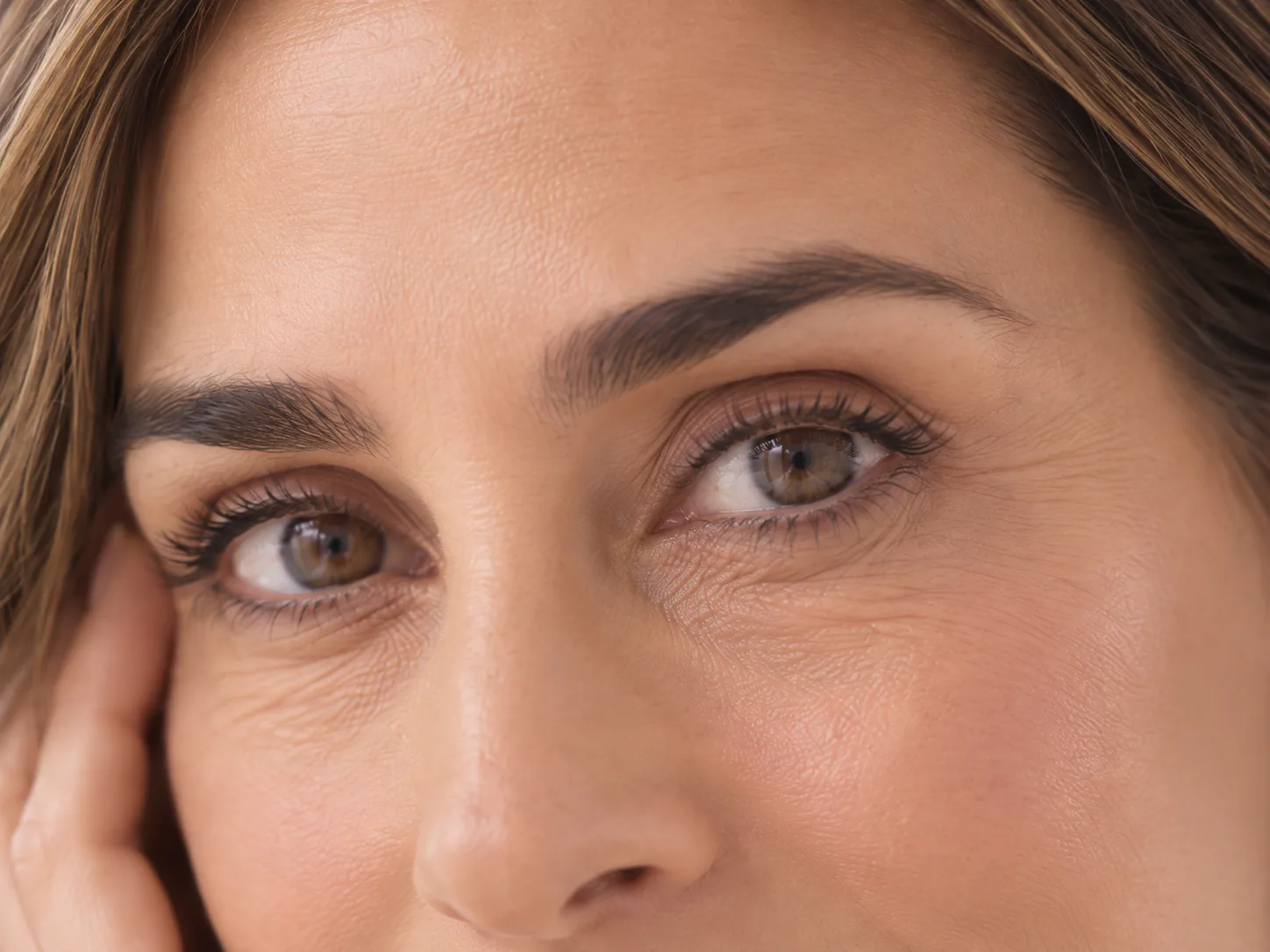
Many people first notice crepey under-eye skin as a change in texture. Concealer starts to settle into fine lines, the skin looks papery in certain lights, and a rich moisturiser improves it for an hour but never fixes it. The reason is simple: crepey skin is not dry skin. It is skin that has thinned and lost collagen, so the routine needs to do more than hydrate.
In short: the best routine is a short one. Use SPF every morning, add a peptide or growth factor eye product, introduce a gentle retinoid at night slowly, avoid anything harsh, and give it around three months. Skincare improves skin quality and slows further change. It cannot rebuild structure, which is where clinical treatment comes in.
This guide is written by the team at the clinic of Dr Maryam Zamani, an oculoplastic surgeon and facial aesthetics doctor who treats the eye area daily. MZ SKIN is Dr Zamani's own skincare range, and the products below are named so you can see how a routine fits together, not because they are the only options.
Why does the skin under my eyes look dry and crepey?
The skin around the eyes is the thinnest on the face, at roughly half a millimetre, so it shows change earlier than anywhere else. Three things usually combine:
- Collagen and elastin loss. Production slows from the mid-twenties and drops faster after forty, so the skin loses its density and spring.
- Sun damage. UV breaks down the collagen you already have, and years of unprotected exposure show up first around the eyes.
- Lifestyle. Smoking, poor sleep and rapid weight loss all reduce the skin's ability to repair and support itself.
Dryness can make crepey skin look worse, and good hydration helps. But hydration alone will not correct the thinning. Dr Zamani explains the causes in more detail in her guide to the best treatment for crepey skin around the eyes.
What is the best skincare routine for crepey under-eyes?
Morning
- Cleanse gently. Use lukewarm water and a mild cleanser. Hot water and harsh foaming products dry the skin.
- Apply a peptide or hydrating eye product. The Microtox Tightening Eye Serum is a peptide serum with a cooling applicator designed for the under-eye area.
- Finish with SPF. Daily protection is the single most important step. The Expert UV Protector SPF50 is formulated for this purpose. Apply it up to the lash line, not into the eye.
Evening
- Remove make-up gently. Hold a soft pad over the eye for a few seconds, then wipe once. Never drag or scrub.
- Apply a retinoid. The Advanced Retinol Complex Serum combines retinol with bakuchiol and is applied to the face and the skin around the eyes, avoiding the edge of the eyelid itself. Start two nights a week and build up as your skin allows.
- Follow with an eye cream. The Intensive Bio-Placenta Eye Cream contains a firming peptide complex and growth factors to support the skin overnight.
If you are pregnant, planning a pregnancy or breastfeeding, check with your doctor before using retinoids.
Which ingredients help crepey under-eye skin?
What should I avoid around the eyes?
- Harsh scrubs and strong exfoliating acids. Most carry a warning to avoid the eye area for good reason.
- Rubbing and tugging. Thin skin loses elasticity faster when it is stretched daily.
- Hot water and heavy fragrance. Both increase dryness and the risk of irritation.
- Too many products at once. Layering several actives can cause redness and flaking. Add one new product at a time.
- Sun exposure without protection, sunbeds and smoking.
If the skin around your eyes becomes persistently red, itchy, swollen or sore, stop new products and see a doctor. That can be a reaction rather than normal sensitivity.
How do I apply products around the eyes?
Use a small, pea-sized amount for both eyes. Dot it along the bony rim under the eye and pat it in gently with a ring finger, which applies the least pressure. Keep products away from the lash line and the edge of the eyelid. Patch test any new product on a small area for a few days first.
How long until I see a difference?
Skincare works gradually. Hydration and comfort improve in days, but texture and firmness need time, and most people need around three months of consistent use before they can judge a retinoid fairly. If you have not noticed any change after three to four months, that is useful information: the cause may be structural, and clinical treatment may do more. Dr Zamani's guide to whether we really need an eye cream offers her view on what products can and cannot do.
When is skincare not enough?
Skincare supports clinical treatment, it does not replace it. If your under-eye skin is clearly thin, loose or lined, treatments that work below the surface can do more:
- Polynucleotides and Profhilo and skin boosters improve hydration and skin quality from within
- Morpheus8 radiofrequency microneedling tightens and remodels collagen
- CO2 laser resurfacing repairs surface texture and thickens the dermis
- Blepharoplasty with laser resurfacing when there is also excess skin
If you also have a hollow, bag or dark circle, the cause may be different. Her guides to under-eye hollows and dark circles explain how to tell them apart.
Book a consultation with Dr Maryam Zamani
If crepey skin around your eyes is a concern, book a consultation at Dr Maryam Zamani's Chelsea clinic. A careful assessment of the area shows whether skincare, treatment or surgery is the right next step. You can also explore the MZ SKIN range, read more about Dr Zamani or view current pricing.
Testimonials
Trustindex rating score: 4.7 of 5, based on 222 reviews
JT

My recent experience with the lovely Dr Maryam Zamani and her fabulous team was outstanding. Dr Maryam gave very professional and proactive...
EC
Maryam is highly skilled when it comes to injecting Botox and filler in the right places, and in the right amount. With other practitioners and doctors I have...
JB
The only one I trust for my skin since 10 years. She is truly amazing and an example for women . Very very happy about my laser treatment and her team is...
MCL
After taking my time researching plastic surgeons I decided to go to Dr. Zamani. I watched her IG often, saw what type of treatments she...
SS
I have been a patient of Dr Zamani’s for years, and to put it lightly, I will never let anyone touch my face if it isn’t her! Not only is Dr Zamani a wonderful person, her....
NC
I visited Doctor Zamani with very droopy upper eyelids and I had been thinking about surgery for sometime. I was given Doctor Zamani’s name by a friend who is in...
No items found.
Book Consultation
As a leading Oculoplastic Surgeon with special interest in Facial Aesthetics, Dr. Maryam Zamani has garnered a global reputation - both in the US and UK - for her meticulous attention to detail and sought-after techniques for eyes and facial aesthetics.
Thank you! Your submission has been received!
Oops! Something went wrong while submitting the form.
Find The Clinic by Dr Maryam Zamani in the heart of Chelsea
Book NowLocated on the Kings Road, our clinic is easy to reach from Chelsea, Kensington, Belgravia, Knightsbridge, South Kensington, Fulham and Battersea. We are positioned just moments from Sloane Square with excellent transport links across Central and South West London.
Public Transport
- Nearest tube: Sloane Square (District & Circle lines)
- Approx. 5-minute walk
- Multiple bus routes along King’s Road
Public Transport
- Metered on-street parking available on surrounding roads
- Nearby car parks: Duke of York Square & Cadogan Place
- Please allow additional time during peak hours
Accessibility: Please let us know if you require any assistance prior to your appointment, our team will be happy to help ensure your visit is comfortable.