.avif)


May 10, 2022
SPF Essentials
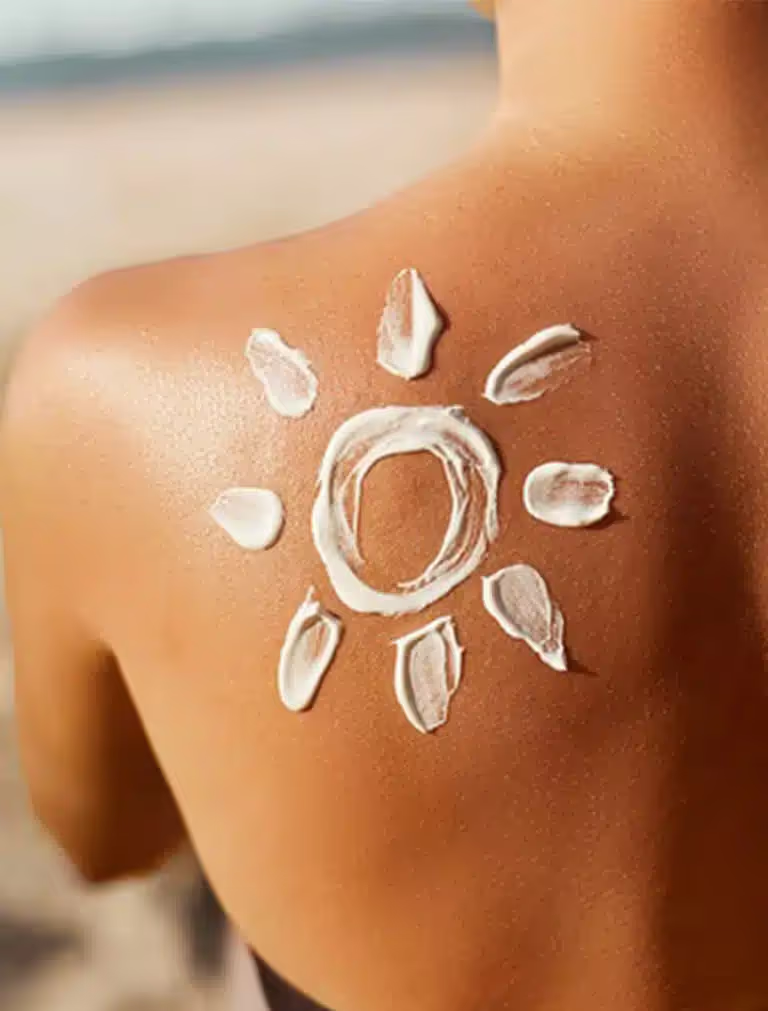
It is always SPF season but with summer around the corner, I wanted to go over the SPF essentials. We know protecting skin from sun exposure will reduce the risk of skin cancer, sunburn and premature ageing (sunspots, wrinkles, sagging skin).
What does SPF mean?
SPF is the Sun Protection Factor and indicates the level of protection against getting a sunburn only.
- An SPF of 30 blocks 97% of the suns UVB rays. This means that it will take you 30 times longer to burn the skin than without SPF protection.
- An SPF of 50 blocks 98% of the suns UVB rays. This means that it will take 50 times longer to burn the skin than without SPF protection.
- An SPF of 100 blocks 99% of the suns UVB rays. This means that it will take 100 times longer to burn the skin than without the SPF protection.
It is important to remember that a high SPF does not work longer than a lower SPF so reapplication is the same regardless of the number.
What is the difference between UVA and UVB rays? What does broad spectrum SPF mean?
Sunlight consists of UVA and UVB rays. UVA rays prematurely age the skin, causing pigmentation issues (sun spots), fine lines and wrinkles. UVB rays are the primary cause of sunburn and skin cancers.SPF indicates protection against UVB rays ONLY.A broad spectrum sunscreen means that the sunscreen will protect against both UVA and UVB rays.
What is the difference between chemical and physical sunscreen?
Chemical sunscreens functin to absorb the suns rays. These formulations are easier to rub into skin without a white residue and often contain ingredients like oxybenzone, avobenzone, octisalate, octocrylene, homosalate, and octinoxate.Physical sunscreens function to sit on the skins surface and deflect the suns rays. Formulations commonly contain zinc oxide and/or titanium oxide and are used on sensitive skin.
When should I wear SPF?
SPF should we born every single day, regardless of whether you can see the sun. Even on cloudy days, up to 80% of the suns harmful rays can penetrate into the skin. Snow, sand and water increase the need for SPF because they reflect the suns rays.
What Sunscreen Should I use?
Look for an sunscreen that offers broad spectrum protection against UVA and UVB rays with an SPF of 30 or higher that is water resistant.Other ways to protect the skin include wearing SPF swim shirts, wide brimmed hats to cover the entire face, and sunglasses.
How much sunscreen should I use & how often should I apply it?
Most people do not apply enough sunscreen or top up enough. In generaly, most adults need about 1 ounce (enough to fill a shot glass) to protect the entire body. Sunscreen should be applied to dry sin ideally 15 minutes before going outdoors. Do not forget the tops of the feet, neck, ears, lips and the top of the head! Reapplication of sunscreen should be done every 2-3 hours when outdoors and/or after swimming or sweating.

What type of sunscreen should I use?
This is really a matter of personal preference. For dry skin and the face, I prefer creams that can also function to hydrate the skin and give a little glow. For oily/acne prone skin, I prefer non comedogenic gels to give an overall matt finish while protecting the skin. For melasma prone skin, I prefer physical sunscreens alone or in combination with chemical sunscreens. Chemical sunscreens are not enough for pigmentation issues. I try to stay away from sprays as it can be difficult to thoroughly apply the sunscreen in adequate dosing. Here are a few of my favourites!
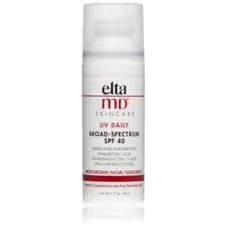
Eltamd UV Daily SPF
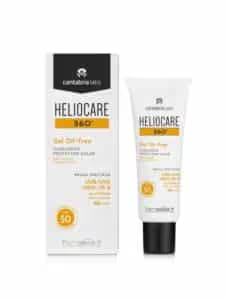
Heliocare 360. Oil Free Gel
Heliocare offers so many options. The gel is a favourite in the summer as it is oil free and great for oily/acne prone skin and offers matt colour.
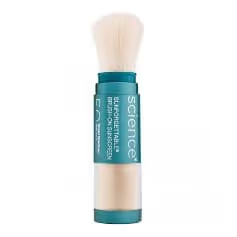
Colorescience Sunforgettable Total Protection Brush-On Shield SPF 50
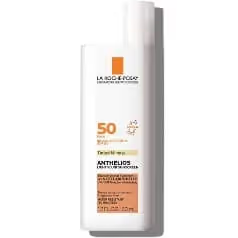
La Roche-Posay Anthelios Mineral Tinted Sunscreen for Face SPF 50
Testimonials
Trustindex rating score: 4.7 of 5, based on 222 reviews
JT

My recent experience with the lovely Dr Maryam Zamani and her fabulous team was outstanding. Dr Maryam gave very professional and proactive...
EC
Maryam is highly skilled when it comes to injecting Botox and filler in the right places, and in the right amount. With other practitioners and doctors I have...
JB
The only one I trust for my skin since 10 years. She is truly amazing and an example for women . Very very happy about my laser treatment and her team is...
MCL
After taking my time researching plastic surgeons I decided to go to Dr. Zamani. I watched her IG often, saw what type of treatments she...
SS
I have been a patient of Dr Zamani’s for years, and to put it lightly, I will never let anyone touch my face if it isn’t her! Not only is Dr Zamani a wonderful person, her....
NC
I visited Doctor Zamani with very droopy upper eyelids and I had been thinking about surgery for sometime. I was given Doctor Zamani’s name by a friend who is in...
No items found.
Book Consultation
As a leading Oculoplastic Surgeon with special interest in Facial Aesthetics, Dr. Maryam Zamani has garnered a global reputation - both in the US and UK - for her meticulous attention to detail and sought-after techniques for eyes and facial aesthetics.
Thank you! Your submission has been received!
Oops! Something went wrong while submitting the form.
Find The Clinic by Dr Maryam Zamani in the heart of Chelsea
Book NowLocated on the Kings Road, our clinic is easy to reach from Chelsea, Kensington, Belgravia, Knightsbridge, South Kensington, Fulham and Battersea. We are positioned just moments from Sloane Square with excellent transport links across Central and South West London.
Public Transport
- Nearest tube: Sloane Square (District & Circle lines)
- Approx. 5-minute walk
- Multiple bus routes along King’s Road
Public Transport
- Metered on-street parking available on surrounding roads
- Nearby car parks: Duke of York Square & Cadogan Place
- Please allow additional time during peak hours
Accessibility: Please let us know if you require any assistance prior to your appointment, our team will be happy to help ensure your visit is comfortable.